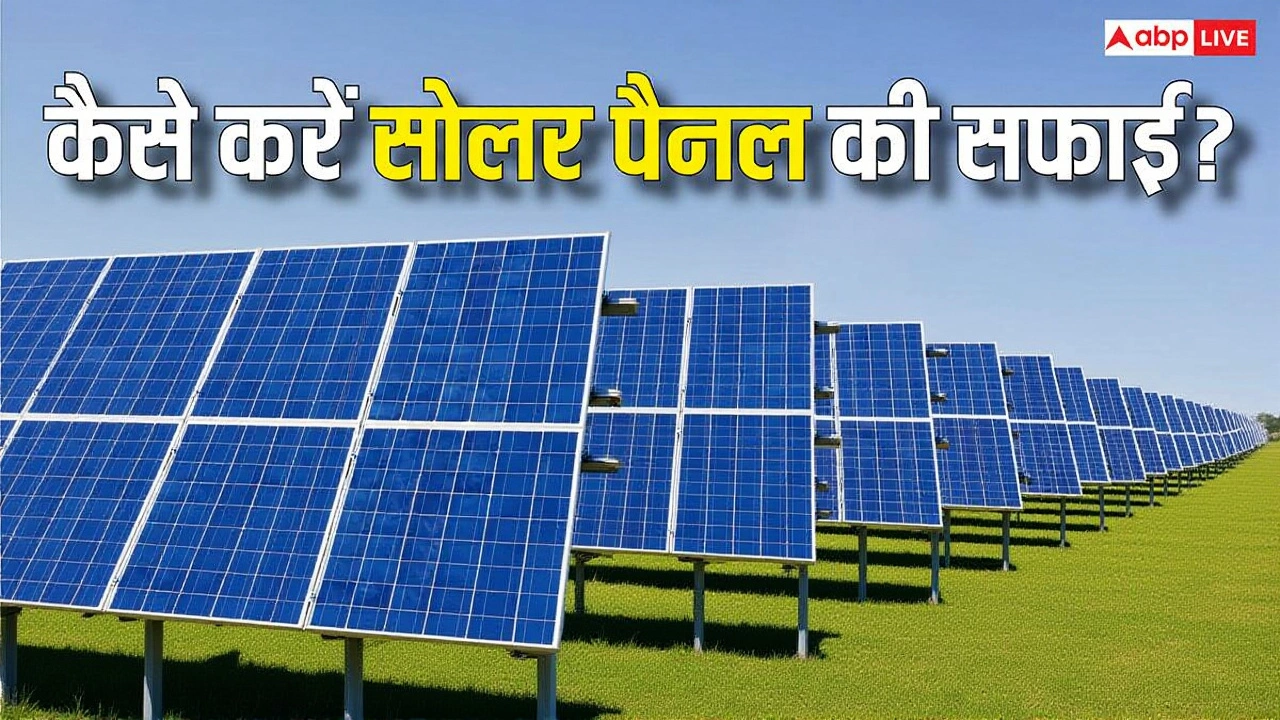
It's May 2026, and with temperatures soaring across India, the question on every homeowner's mind isn't just *if* they should run their air conditioner, but how to do it without breaking the bank. Turns out, running a standard 1.5-ton AC on solar power is more nuanced than most people think—and getting the system size wrong could leave you sweating (and spending) all summer.
On May 13, 2026, Aaj Tak, one of India’s leading Hindi news portals, published a visual guide addressing this exact dilemma. The takeaway? For a home relying heavily on AC, you’re looking at roughly a 3-kilowatt solar system—which typically means installing between five and eight solar panels. But here’s the twist: that number shifts dramatically depending on your usage patterns, AC type, and whether you want to go completely off-grid.
The Power Puzzle: Why 3kW Isn’t Always Enough
Let’s break down what “1.5-ton” actually means in real-world terms. Most modern 1.5-ton AC units draw between 1,300 and 1,800 watts during operation. That sounds manageable, right? Wrong. When an AC compressor kicks in, it demands a surge of power—often triple its running load. This starting current is where many homeowners get caught off guard.
According to Lumos Solar, a prominent solar energy company in India, if you’re only powering a water pump, a 3kW system suffices. But add an AC to the mix? You’ll need at least 5 kilowatts to handle peak loads comfortably. Their blog post emphasizes that going below this threshold risks frequent tripping or inefficient cooling during peak heat hours.
Here’s why this matters: In April through September—the typical AC season—Indian households see electricity bills jump by ₹2,500–₹3,000 per month for just one 1-ton unit. Scale that up to 1.5 tons, factor in multiple rooms, and suddenly your monthly bill can exceed ₹5,000. Solar isn’t just eco-friendly anymore; it’s financial self-defense.
Inverter vs. Non-Inverter: The Hidden Cost Factor
This is where things get interesting. Not all ACs are created equal when it comes to solar compatibility. Traditional non-inverter ACs operate on an on/off cycle, meaning they consume massive spikes of power each time the compressor restarts. As explained in a widely viewed YouTube tutorial titled *“1.5 Ton AC Sari Raat Chalo, Bill Zero?”*, these units may require a 5-kW inverter simply to survive the startup surge—even if their rated power is only 1.8kW.
But wait—there’s good news. Inverter technology changes the game entirely. These smarter units adjust compressor speed based on room temperature, avoiding those brutal power surges. A 1.5-ton inverter AC rarely exceeds 1,800 watts max, making it far easier to pair with smaller solar setups. Some dedicated “solar AC” models even cap out at 1,200 watts, allowing them to run efficiently on just a 2kW inverter.
So which should you choose? If you already own a non-inverter AC, don’t panic—but plan accordingly. Upgrade your inverter to 5kW minimum. If you’re buying new? Go inverter-only. Your wallet—and your grid connection—will thank you.
Real-World Calculations: What Experts Are Saying
Majestic India, a Hindi-language tech and lifestyle platform, broke down the math in a July 2022 article that remains highly relevant today. They noted that under standard conditions, a 1kW solar system generates approximately 4–5 units (kWh) of electricity daily. So a 3kW setup yields around 12–15 kWh per day—enough to run a 1.5-ton AC for about six hours.
Want full-day coverage? Then scale up. One expert recommended a 4kW system for near-continuous daytime use, while another suggested 5kW for households combining AC with other appliances like refrigerators, lights, and fans. Remember: solar doesn’t work at night unless paired with battery storage—which adds significant cost.
And let’s talk money upfront. A decent 1.5-ton AC costs between ₹38,000 and ₹42,000. Add installation, wiring, inverters, and batteries, and your total investment easily crosses ₹1.5 lakh. Yet within two to three years, savings on electricity bills often offset that initial outlay—especially given rising tariffs across Indian states.
What Should You Do Next?
If you’re serious about switching to solar for your AC needs, start with a simple audit:
- Check your AC’s input rating sticker—it tells you true wattage, not marketing claims.
- Determine daily runtime: 6 hours? 12? All day?
- Decide if you want hybrid (grid + solar) or fully off-grid operation.
- Get quotes from certified installers who understand local sunlight patterns.
Don’t fall for oversimplified advice online. Yes, some sources say 3kW works fine. Others insist on 5kW. Both can be correct—it depends entirely on your context. Location matters too: Delhi gets different sun exposure than Mumbai or Chennai. Panel orientation, shading, and seasonal variation all play roles.
The bottom line? Start small if budget is tight, but design your system with room to grow. Many users begin with 3kW for basic daytime cooling, then expand later as prices drop and incentives increase. With government subsidies still available in several states, now might be the perfect time to act.
Frequently Asked Questions
How much does a 1.5-ton AC consume daily?
A 5-star rated 1.5-ton inverter AC consumes roughly 10–12 units (kWh) per day when run continuously for 10–12 hours. Non-inverter models can burn up to 18–20 units due to higher startup currents and less efficient compression cycles. Always check the BEE star label and nameplate ratings for accurate figures.
Can I run my AC directly from solar panels without batteries?
Yes—but only during daylight hours. Without battery backup, your AC will shut down once sunlight fades or clouds pass overhead. Hybrid systems connect both solar and grid simultaneously, automatically switching sources. Pure off-grid setups require expensive lithium-ion or tubular lead-acid batteries to store excess energy for nighttime use.
Is it worth investing in a larger solar system just for AC?
Absolutely—if you plan to keep the AC for 5+ years. While upfront costs range from ₹1.2–1.8 lakhs for a 5kW system, average monthly savings of ₹3,000–₹5,000 mean payback periods of 2.5–3.5 years. After that, you enjoy free cooling for decades. Plus, property value increases with installed renewable infrastructure.
Do I need special wiring or circuit protection for solar-powered AC?
Yes. Standard household wiring may not handle sustained high loads safely. Install dedicated circuits with appropriate MCBs (Miniature Circuit Breakers), surge protectors, and DC isolators. Professional certification ensures compliance with IS standards and prevents fire hazards caused by overheating or voltage fluctuations.
Are there any government subsidies for residential solar installations in 2026?
Several Indian states continue offering central and state-level subsidies under PM-KUSUM and rooftop solar schemes. Subsidies vary by location and system size—typically covering 30–40% of capital expenditure for systems under 10kW. Check your state DISCOM website or visit [official portal link placeholder] for updated eligibility criteria and application deadlines.